Hyperbaric Chamber Lead Time: Same-Day Dispatch on Stock, 15–30 Days on Custom Power
Lead time is not one number. It is the longest of several paths that run at the same time — and in this product category, the longest path is almost never the chamber itself. It is the electricals.
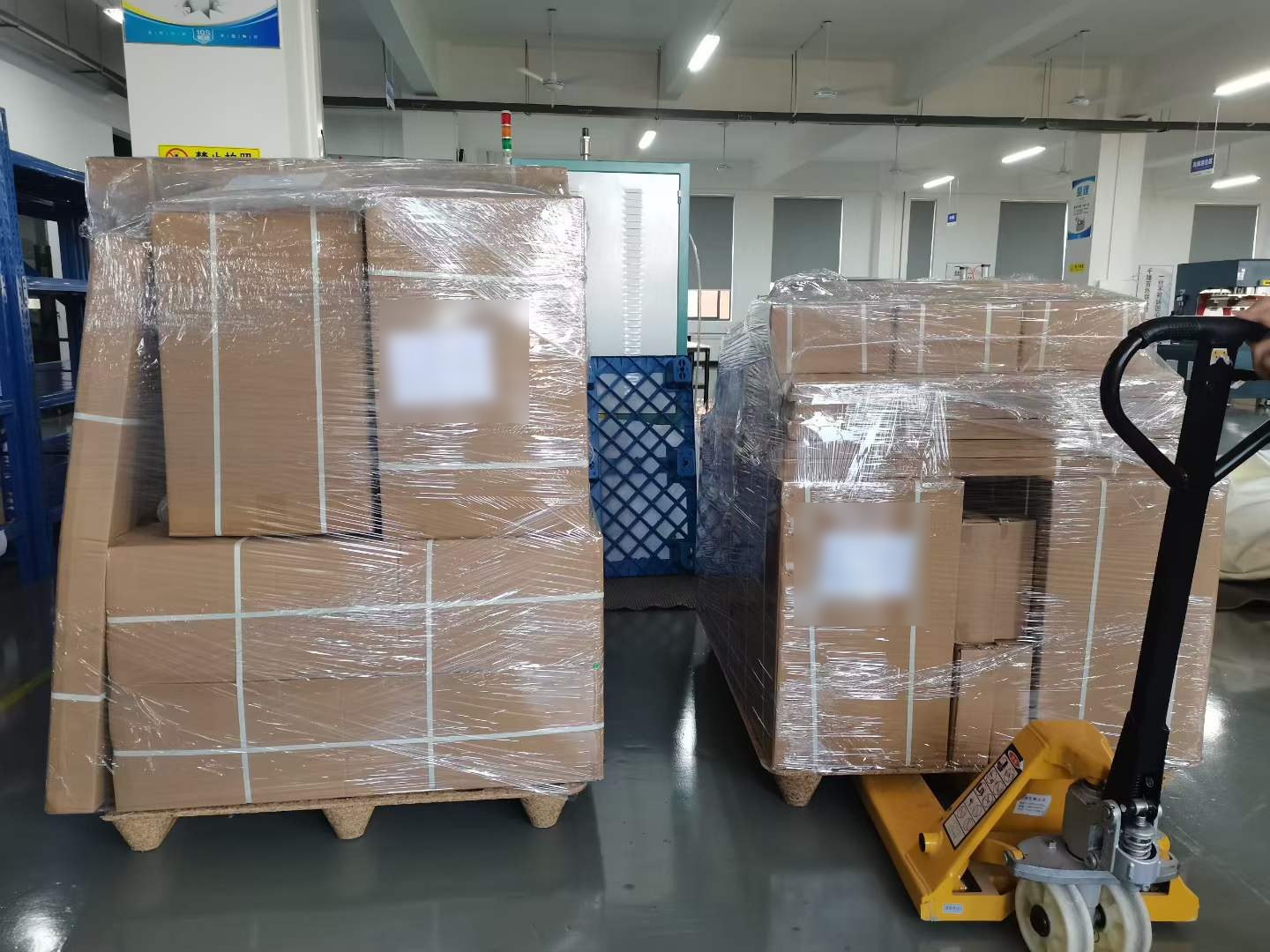
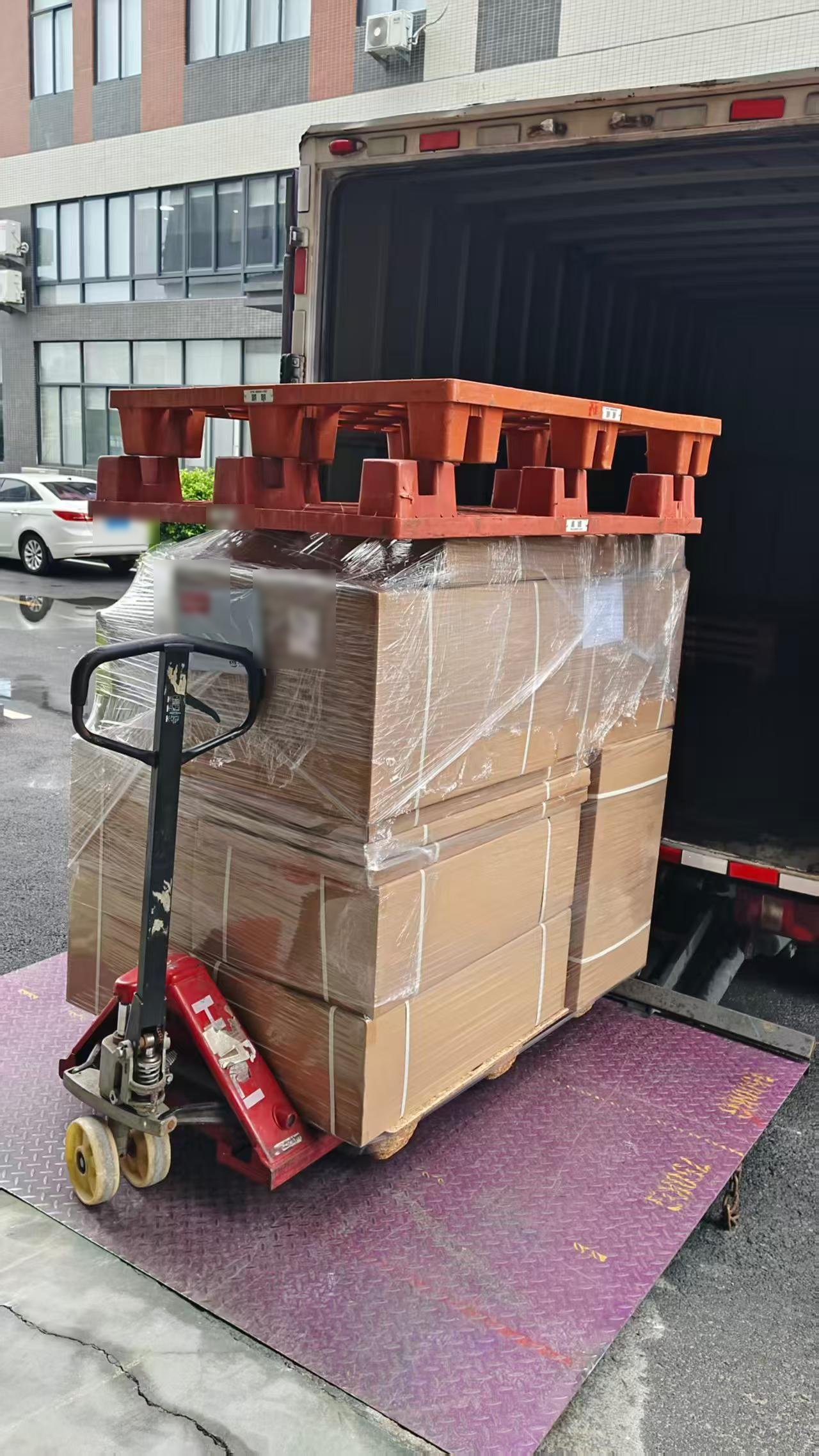
Almost every buyer opens with the same question: what is your lead time? And almost every supplier answers with a single number. That number is usually wrong, or at least incomplete — because a mild hyperbaric chamber is not one item coming off one line. It is a soft shell, an internal frame, an oxygen concentrator and a refrigerated air dryer — plus, on the sitting and sit-and-lie formats, a small steel base plate and a chair — packed into four to seven cartons.
Those parts do not all take the same time to prepare. The shell is fast. The electricals are not. Once you see which part is the constraint, the whole picture stops being mysterious — including why a single unit can take longer than twenty.
At a glance
| What you order | Lead time | Note |
|---|---|---|
| Stock unit, white, HEAOCEAN logo, standard power | Same day | Dispatched the day you order; at departure port within 3 days |
| Your logo, standard power | Within 3 days | No retail carton |
| Your logo + retail carton, standard power | 5–7 days | The most common small-batch configuration |
| 1.5 ATA reinforced build, standard power | 7–14 days | Material change only; no electricals touched |
| Custom power configuration | 15–30 days | Larger orders move up the queue; a single unit moves down |
| 1.5 ATA + custom power | 15–30 days | Run in parallel; they do not stack |
| Custom power + your logo + retail carton | 15–30 days | The most common order we quote. Branding runs in parallel and adds nothing |
Every figure in this article measures from artwork approval to production complete. Nothing else is included.
Before that point: enquiry, quotation, sampling and revisions. This is the part you control — every extra round of changes is extra days, and we cannot put a number on it.
After that point: inland transport and export clearance to the departure port, roughly +1–3 days. Then ocean, air or courier freight and destination clearance, which depends on your Incoterm.
If you are comparing our figures against a supplier who quotes "delivery time", check what their clock starts and stops on. Most of the gap between two apparently different numbers is this definition, not the factory.
The bottleneck is the electricals, not the shell
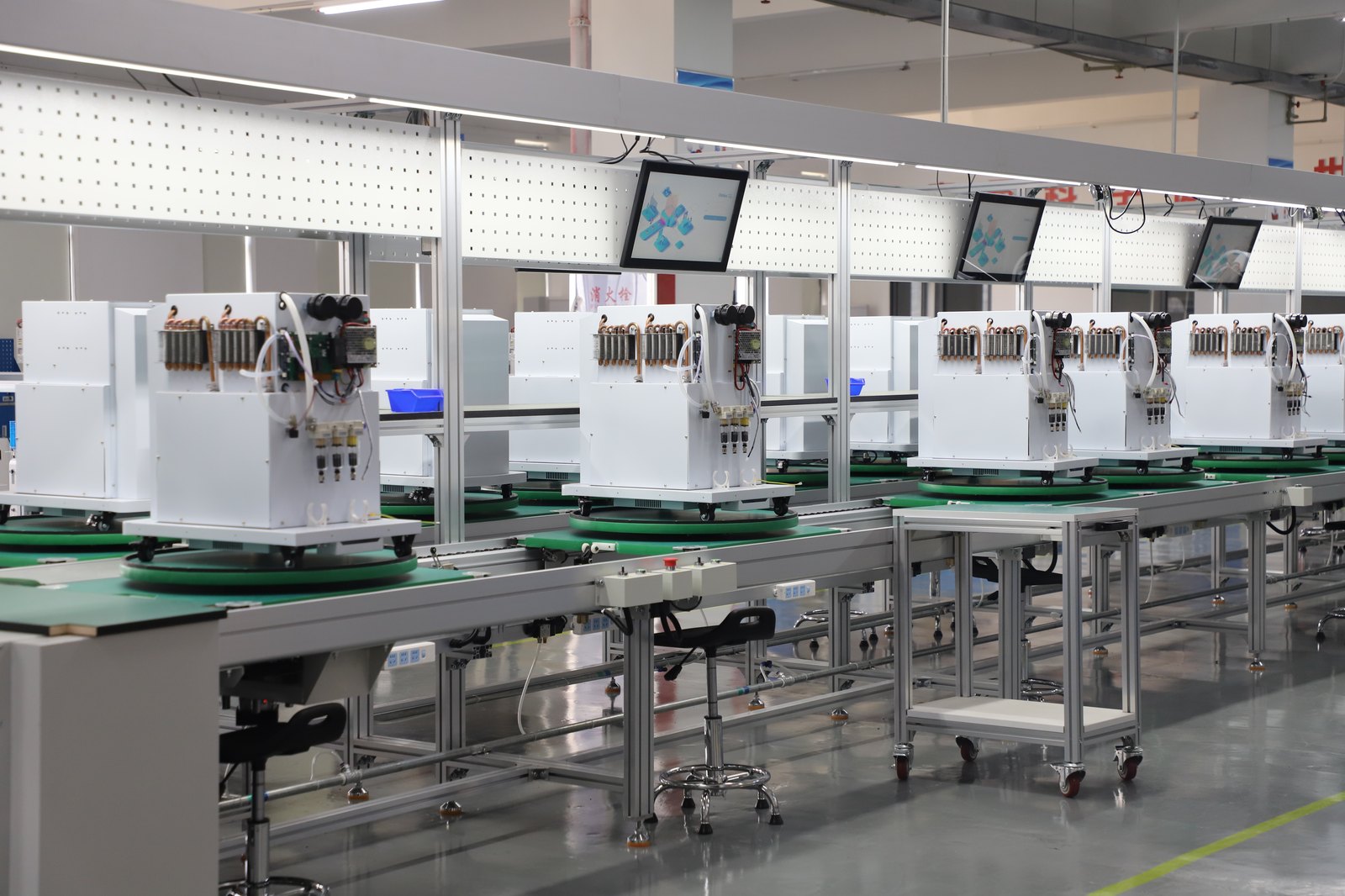
Here is the fact that explains everything else in this article. The soft shell and the internal frame are made on our own semi-automated line in Quanzhou, at 5–7 units a day. The shell has never been the constraint. It is a fabric structure; it folds, it welds, it pressure-tests, and it moves.
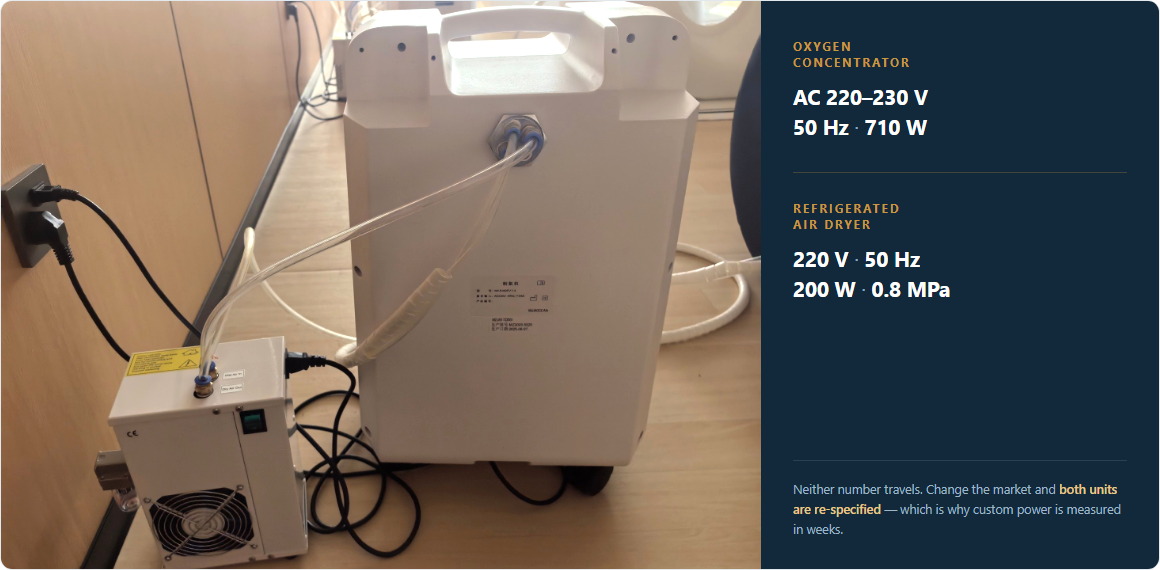
The oxygen concentrator and the refrigerated air dryer are different. They are specified to your destination's voltage and frequency. If your market runs 110 V at 60 Hz, both units have to be changed before the chamber can be configured for you — and changing them is a scheduled job, not a shelf pick.
So when a buyer asks why one configuration ships in a day and another takes a month, the answer is almost never "the chamber". It is whether the electrical package had to be rebuilt.
Why stock ships the same day
We hold several dozen units of each of the three single-user formats — sitting, sit-and-lie, and lying — in white, carrying the HEAOCEAN logo. Order one of those and it is dispatched the same day, reaching the departure port within three.
There is a trade-off in that sentence, and it is worth stating plainly: stock is brand stock. If you need the unit tomorrow, you take the white chamber with our name on it. If you need your own name on it, you enter the build queue. That is not a policy we invented to be difficult — it is what "in stock" means when the product carries a brand.
The line runs at 5–7 units a day, about 200 a month. That number matters later, when we get to why twenty units is a meaningful quantity and one unit is not.

1.5 ATA: 7–14 days, and why it is faster than a power change
This one surprises people. Raising the working pressure from the standard 1.3 ATA to a 1.5 ATA configuration takes 7–14 days — which is faster than changing the power configuration, despite sounding like the more serious modification.
The reason is that 1.5 ATA is a material change. The shell is built from reinforced material and the assembly is adjusted accordingly. Nothing in the electrical package moves. No concentrator is swapped, no dryer is rebuilt, no new compliance path is opened.
Most suppliers bundle every kind of customisation into one long, vague window, which makes the whole category look slow. Splitting it by what actually changes — material, electricals, or appearance — produces a much shorter and much more honest answer. A reinforced shell is a two-week job. A rebuilt electrical package is not.
If you need both, they run at the same time. A 1.5 ATA build with a custom power configuration still lands in 15–30 days, not the sum of the two.
Custom power: 15–30 days, and the part nobody mentions
The 15–30 day range is not a hedge to protect the factory. It is a direct consequence of how the work is scheduled, and it produces a result that runs against every retail instinct:
A single unit waits longer than twenty.
One chamber with a non-standard power configuration is a small, awkward job. It cannot be batched with anything else, so it gets slotted in behind the batch work already on the floor — and can sit for twenty-something days, occasionally thirty. Twenty or thirty units with the same configuration is a batch: the concentrators and dryers are converted together, the line is set once, and the whole run clears in around fifteen days.
So the range is not "somewhere between two weeks and a month, we will see". It is: larger orders sit at the fast end; single units sit at the slow end. If you are planning around a fixed date, that is the single most useful thing on this page.
Buyers often assume a small first order will be treated as a priority because it is low-risk. In a factory it is the opposite: a small order is the hardest thing to schedule. If speed matters more than minimum quantity, the batch is the faster route — not the slower one.
What branding adds: 3–5 days, or nothing at all
This is where most of the confusion in this category lives, so it is worth being precise. The same request — "put my logo on it" — adds three days in one scenario and zero in another. The difference is whether you also changed the power.
If you did not change the power
Production is quick, so branding becomes the critical path:
- Your logo only — within 3 days.
- Your logo plus a printed retail carton — 5–7 days.
If you did change the power
The electrical rebuild takes 15–30 days, and branding is completed inside that window. It adds nothing: still 15–30 days. This is the configuration we quote most often, and it is the one where buyers most often expect to be told "add a week for the logo". There is no week to add.
Branding also carries a minimum quantity, because tooling is a one-off cost — the arithmetic behind it is set out in our MOQ guide.
"Within 3 days" does not mean the logo takes three days to make. Logo design, back-and-forth and final approval all happen before the clock starts, and none of it is counted. The three days are what it takes for twenty units to move down the line once the artwork is signed off.
This distinction prevents the most predictable dispute in the whole process: a buyer sends a logo file on Monday, counts three days, and asks on Thursday why the goods are not ready — when the artwork is still on its second revision and the line has not started.
No peak season
There is no seasonal queue. The line is semi-automated and runs at 5–7 units a day year-round, including the weeks before and after Chinese New Year — the period when buyers of Chinese-manufactured equipment most expect to be told "we are fully booked until March".
Two hundred units a month is not a large number for this category, and we are not going to pretend it is. What it does mean is that a twenty-unit order is ten percent of a month, not a special favour. When a supplier tells you their lead time depends on the season, what they are usually telling you is that their capacity is committed elsewhere.
Lead time ends at the port, not at your door
Every figure on this page stops at a specific point, and it is not your front door. It is not even the departure port. It is production complete. The rest of the journey is a separate calculation, and it is usually the part that goes wrong.
We supply on FOB or DDP, by sea or air, and can also ship by courier where the freight cost is acceptable — usually for a sample or a spare part rather than a chamber. We do not quote CIF.
- FOB — we deliver to the departure port; you control the forwarder and destination clearance. Usually the cheapest route, and the one we recommend.
- DDP — door to door by sea or air, including duties and final delivery. Simpler, and priced accordingly.
- Courier — fastest, but the freight is high relative to the goods. Sensible for samples and replacement parts.
We recommend FOB not because it is easier for us, but because it keeps the choice and the cost on your side of the transaction. A supplier who pushes DDP on every order is usually selling you their forwarder's margin.
And one thing worth saying plainly: if your opening date is fixed, the number to watch is not our production time. It is how long it takes you to approve the artwork. That is the only stage in the chain you can shorten.
How many fit in a 40HQ
Freight is charged on volume in this category, not weight — a fully loaded container of chambers is well under the payload limit. So the number that matters is cubic metres per unit.
| Model | Cartons | Gross weight | CBM / unit | 40HQ |
|---|---|---|---|---|
| Sitting HS050 | 6 | 74.5 kg | 0.512 | ≈132 |
| Sit & lie HC050 (one chair) | 6 | 80.9 kg | 0.598 | 113 |
| Sit & lie HC050 (two chairs) | 7 | 92.1 kg | 0.774 | 87 |
| Lying HL050 (M) | 4 | 55.2 kg | 0.538 | 125 |
| Lying HL050 (L) | 4 | 58.8 kg | 0.615 | 111 |
The HS-500 hard-shell chamber ships in sections and is welded on site. It needs an installation visit, which makes it a project rather than a product — we generally show it and quote it, and we do not recommend it for a first purchase. If you are furnishing a room, the soft-shell formats will get you operating faster and with far less site work.
The gap is worth putting a number on, because "lead time" stops meaning much if the unit then sits in a corridor for a week. A soft-shell chamber is installed by two people in 40–60 minutes with no special tools — there is a filmed walkthrough of the full install on a lying unit, start to finish. The hard shell does not work that way, and that is the real reason we steer first buyers away from it.
Five details we need before we can confirm a date in writing
A lead time is only worth something if it is written down against a specific configuration. These five details are what turn a general answer into a commitment:
- Destination and power — voltage, frequency and plug type. This single detail decides whether your order is a stock dispatch or a 15–30 day build.
- Quantity and model mix — how many of which format. Quantity also decides where you land inside the 15–30 day window.
- Working pressure — standard 1.3 ATA, or a 1.5 ATA configuration built to order.
- Branding — your logo, a printed retail carton, both, or neither. Include artwork status: approved, in review, or not started.
- Incoterm — FOB or DDP. This changes who books the freight and who carries the risk after the port.
Send those five and the answer stops being a range and becomes a date.
Planning backwards from your opening date
Worked example, opening on 1 March. The trap here is arithmetic: February has 28 days and ocean freight takes about 30, so the schedule runs back through the whole of January — not to mid-February, which is where most plans break.
| Working back | Stock order | Your brand + custom power |
|---|---|---|
| Opening date | 1 Mar | 1 Mar |
| ← clearance + delivery, allow 10 days | at port 19 Feb | at port 19 Feb |
| ← ocean freight, ~30 days | sail 20 Jan | sail 20 Jan |
| ← production complete to port, +3 days | dispatch 17 Jan | complete 17 Jan |
| ← production | same day | 15–30 d → approve by 18 Dec–2 Jan |
| ← sampling and revisions, allow 1–2 weeks | — | start in early December |
If you only count to the port and ignore clearance and delivery, you can shift everything ten days later — stock ordered on 27 January, custom sailing on 30 January. Those ten days are the ones buyers forget, and they are the ones that quietly sink an opening date.
What breaks the schedule is not our 15–30 days. It is the sailing date in the third week of January. Miss that and no factory can rescue you. Which is why the only stage in the whole chain a buyer can genuinely accelerate is artwork approval — the production days and the ocean days are both fixed, and neither is yours to negotiate.
Frequently asked questions
Why is stock only available in white?
Because stock is built to one specification and held against demand. White is the finish that sells across the widest range of markets. A colour change is a custom order rather than a stock pick, and it starts from 20 units.
Can I buy a single unit to test?
Yes. A single unit is charged, not free, and it is not deducted from a later bulk order. If you take it in stock configuration it is dispatched the same day; if you need a different power configuration it enters the 15–30 day build queue, where a single unit sits at the slower end.
I need both 1.5 ATA and a custom power configuration. Do the lead times add up?
No. They run in parallel. A reinforced shell is a material change and a power change is an electrical rebuild — different work, done at the same time. Expect 15–30 days, not the sum of the two ranges.
Does adding my logo really not add any time?
It depends on what else is in the order. If the power configuration is being rebuilt, the 15–30 day window comfortably absorbs logo production and carton printing, so nothing is added. If the power is standard, production is only a few days and branding becomes the critical path — 3 days for a logo, 5–7 with a printed carton.
When does the lead time actually start?
On artwork approval, not on the order date and not on the deposit date. Enquiry, quotation, sampling and revisions all happen before the clock starts. If you are planning to a fixed date, treat approval as the milestone that matters.
Will Chinese New Year delay my order?
The line runs at 5–7 units a day year-round and there is no seasonal queue. That said, book early around the holiday period anyway — freight capacity tightens even when production does not.
Should I choose FOB or DDP?
FOB if you have a forwarder you trust or want to control cost — it is usually the cheaper route and it is the one we recommend. DDP if you want one price and one responsible party through to your door. We do not quote CIF.
How many units fit in a 40HQ?
Roughly 132 sitting chambers, 125 lying chambers in the M size, 113 sit-and-lie with one chair, or 87 with two chairs. Freight is volume-limited rather than weight-limited, so cubic metres per unit is the number to work from.
Can the lead time be shortened if I pay for priority?
For a custom power configuration, the constraint is scheduling rather than labour, so paying more does not move a single unit ahead of a batch. The realistic way to shorten the wait is to increase the quantity — which is the opposite of what most buyers expect.
Three formats, three lead time profiles
Sitting HS050
1600 × 650 × 1200 mm. 2.47 m² planning zone. The format most often held in stock.
Sit & lie HC050
2000 × 650 × 1200 mm. Seated or lying in one chamber. Available with one or two chairs.
Lying HL050
Ø 750 × L 2000 mm (M) or Ø 800 × L 2250 mm (L). Full-length lying format.
Tell us five things and we will give you a date
A written lead time is only possible against a defined configuration. Send these and we will confirm the build slot, the cartons and the terms in writing:
- Destination country, voltage and plug type
- Quantity and model mix
- Standard 1.3 ATA or a 1.5 ATA build
- Your logo, printed carton, both or neither — and artwork status
- FOB or DDP
HEAOCEAN mild hyperbaric chambers are wellness and recovery products intended for general relaxation and personal wellness use. They are not medical devices and are not intended to diagnose, treat, cure or prevent any disease. Lead times, packing data and terms quoted in this article are for reference and are confirmed in writing against a specific configuration before order. Loading figures are estimates based on usable container volume and must be confirmed with your freight forwarder.